
2026 Social Media Marketing Forecast: 36 Bold Predictions and What They Mean for You

As we approach 2026, the social media landscape is shifting faster than ever — propelled by AI, AR/VR, creator economies, and evolving platform dynamics. In his recent piece, Andrew Hutchinson outlines 36 predictions for social media marketing in 2026, offering a window into how major platforms may evolve — and how marketers can stay ahead. In this blog, we’ll synthesise the key themes, explore what’s likely coming, offer actionable insights, and highlight top strategies you should begin planning now.
The Big Picture: What’s Driving Change
The core drivers behind the predictions are not isolated to any single app — they reflect broader shifts across technology, user behaviour, and monetisation models. Some of the most important cross-platform trends include:
AI as backbone infrastructure — from ad targeting and content creation to chatbots and avatar systems, AI will be deeply embedded in all layers of social engagement.
Immersive experiences and the metaverse pipeline — AR, VR, and smart glasses are moving beyond novelty; platforms are priming for the next wave of spatial and mixed-reality interaction.
Creator monetisation evolves — the emphasis is shifting from pure reach to revenue models: boosting, subscriptions, in-app commerce, microtransactions, and AI avatars.
Algorithmic disruption & regulation — courts (e.g. in the Netherlands) are challenging algorithmic news feeds, pushing platforms to offer algorithm-free chronological views.
Commerce-first content — social platforms are increasingly integrating shopping, one-click transactions, livestream selling, and mini-app ecosystems to blur the line between browsing and buying.
With these currents driving change, let’s walk through how each major platform is expected to evolve — and what that means for marketers.
Platform Forecasts: What to Expect in 2026
Facebook / Meta (Facebook + Instagram + Horizon integration)
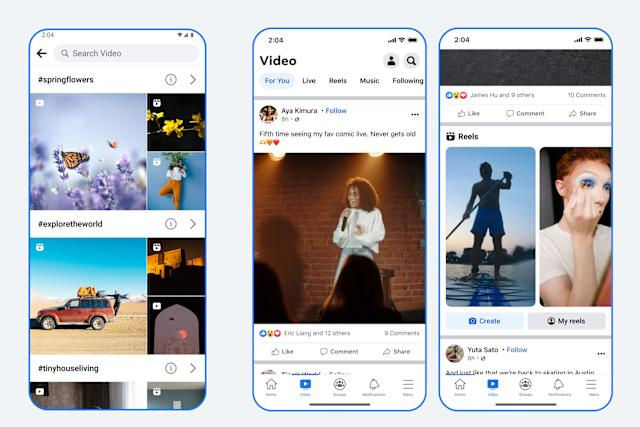
Meta may be required to provide permanent opt-out of algorithmic feeds (i.e. chronological views).
Tighter integration with Horizon Worlds / metaverse features; avatars, virtual experiences, and interactive video will be more deeply woven into core app usage.
Footage from smart glasses will gain prominence, flagged or watermarked differently to encourage use and showcase device utility.
Meta will lean into using product-related queries in its AI to support more seamless ad targeting and shopping experiences.
For Instagram, “open to Reels” as the default entry feed is increasingly likely, as Reels already account for ~50% of time spent in the app.
The Instagram “Edits” video editor may shift to a paid model for advanced AI features.
Creators will be able to more easily boost content, including simplified “boost for reach” options.
Threads & Real-Time Social
Threads is expected to surpass X (Twitter) in active users.
To develop its identity, Threads will further separate from Instagram in recommendation logic and content flows.
Expect stronger trend highlights in-stream, improved algorithmic relevance, and feed signals tuned for real-time discussion.
X / Twitter
X faces existential pressure — staffing cuts, ad revenue challenges, and shifting usage trends.
One likely pivot is enabling in-app payments, to become a “super app” that supports transactions, subscriptions, and commerce.
Monetisation of adult content or subscription models could be explored, especially as ad revenue tightens.
AI-driven career path mapping will become more prominent, using its vast dataset to project trajectories and recommendations.
Video content will get further priority — full-screen video feed expansions and more live events.
“Quick session” learning content (3-minute micro-lessons) embedded in-stream could take off.
A persistent, assistive in-stream chatbot (“Inbot”) could help users optimise their LinkedIn presence and guide tasks.
Trend insights and improved creator analytics will empower content creators on the platform.
Snapchat
Snapchat’s success in 2026 may hinge on its upcoming AR glasses (Specs). Their adoption and relevance are under pressure, since competing devices (Meta, Apple) are advancing rapidly.
The app will incentivise easier AR lens creation via AI, lowering the barrier for creators.
“Sponsored Snaps” (ads via inbox messaging) will be refined, becoming more personalized and data-driven.
TikTok
TikTok’s U.S. ownership transition may lead to algorithm retraining or structural changes, potentially impacting user engagement.
Livestream shopping will expand in Western markets, catching up to its dominance in Asia.
“Mini-programs” embedded inside TikTok for food, ticketing, etc., will extend commerce functions.
Growth in gaming streams and AI avatars could unlock new creator pathways.
The platform will make it easier for brands to use virtual avatar agents in live content.
A backlash against AI-generated content is mounting; Pinterest is already introducing labelling and filtering of AI pins.
One-click shopping will become more vital — simplifying checkout inside the app.
Virtual try-on tech will advance (e.g., body scans, personalised overlays).
Pinterest may monetise its visual search and consumer behaviour data via AI partnerships.
“...expect to see stronger enforcement of AI labelling, and more action to address the use of AI depictions.”

“Creators will likely be able to more easily boost content… making it as easy as possible for creators to get more traction for their content, while also driving more incremental ad revenue for the app”
Top 3 Tips for Marketers Entering 2026
#1 Embed commerce early
Don’t treat social media and e-commerce as separate silos. Optimise your content for in-app shopping, micro-transactions, livestream selling, and product-linked AI prompts.
#2 Adapt to hybrid AI-human workflows
Use AI tools for ideation, graphics, captions, and targeting — but always layer human judgment, brand voice, and strategic oversight to maintain authenticity and trust.
#3 Diversify your platform strategy
Don’t overcommit to one algorithm or one app. Be ready to shift budgets and content strategies toward platforms that adapt (e.g. Threads, TikTok, LinkedIn). Keep “hedges” in newer or rising platforms sooner than later.

Conclusion
The 36 predictions laid out by Hutchinson paint a compelling, if complex, portrait of what social media marketing may look like in 2026. As platforms race to monetise, automate, and surface immersive experiences, marketers must evolve their strategies in tandem. The key to staying ahead will be:
Building content for commerce, not just engagement
Balancing AI tools with human creativity
Spreading risk via diversified platform presence
The future may be unpredictable — but with foresight, agility, and experimentation, brands can design strategies that ride the tides of change, rather than be swept beneath them.
Need help mastering social media? Rebel Creatives has your back!
Get in touch:
If you're looking to gain a competitive edge in today's digital landscape, look no further than Rebel Creatives. Contact us today to learn more about how we can help you achieve your goals.


Comments